- Posted on
- By Iasus Concepts Ltd.
- In Information

Understanding Voice Loss in ALS and How a Throat Mic Can Help
Amyotrophic lateral sclerosis (ALS) is a progressive neurodegenerative disease that affects the motor neurons responsible for voluntary muscle control. As the disease advances, the muscles required for speech gradually weaken, leading to different forms of voice and speech loss. According to the National Institute of Neurological Disorders and Stroke, this decline is common in both bulbar-onset and limb-onset ALS, and it significantly impacts daily communication and emotional well-being.
Understanding the types of speech loss and what tools can help at each stage gives patients and families clearer direction during a difficult time.
Different Types of Voice and Speech Loss in ALS
Speech problems in ALS vary widely because the disease affects different motor neurons and muscle groups. Organizations like the ALS Association note that communication decline is one of the most challenging aspects of the disease for both patients and caregivers.
Below are the most common forms of voice loss and how they affect communication.
1. Dysarthria (Weak or Slurred Speech)
Dysarthria is the most common early sign of speech difficulty in ALS. Patients may experience:
- Slurred or imprecise words
- Reduced volume
- Slow speech
- Fatigue while speaking
How a throat mic helps:
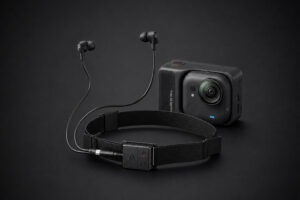
A throat microphone like the IASUS Concepts TEN-4 Throat Mic and Speaker Amplifier Kit captures vibrations directly from the throat rather than relying on airflow from the mouth. This allows even soft or slurred speech to be significantly clearer and easier to understand.
2. Spastic Dysarthria
Caused by upper motor neuron involvement, spastic dysarthria leads to:
- Strained or tight voice
- Slow, effortful speech
- Breaks in sound
How a throat mic helps:
Because the TEN-4 reads vibrations at the source, it can improve audibility even when speech sounds tense or difficult to project.
3. Flaccid Dysarthria
Caused by lower motor neuron damage, flaccid dysarthria results in:
- Weak, breathy voice
- Low volume
- Nasal quality
How a throat mic helps:
Even when airflow is insufficient, throat vibrations can still be captured, allowing clearer communication with minimal physical effort.
4. Dysphonia (Voice Quality Changes)
Dysphonia describes any abnormal voice quality. According to the National Institute on Deafness and Other Communication Disorders, patients may experience:
-
Rough or raspy voice
-
Shaky or unstable tone
-
Quiet, whisper-like speech
How a throat mic helps: The TEN-4 kit amplifies the throat’s natural vibrations, helping stabilize sound and improving clarity.
5. Anarthria (Complete Loss of Speech)
In late-stage ALS, some individuals experience complete loss of speech, known as anarthria. Cognitive ability remains intact, but the person cannot produce meaningful vocal sound.
How a throat mic helps:
A throat mic can help only if there are still detectable throat vibrations. If no vibration is present, alternative communication methods (AAC devices, eye-tracking tools, partner-assisted spelling) become essential.
The World Health Organization reports that ALS and related motor neuron diseases create high emotional, physical, and financial burdens, making communication support urgently important.
How the IASUS TEN-4 Throat Mic and Speaker Amplifier Kit Can Help ALS Patients
The TEN-4 Kit is designed to detect and amplify vibrations directly from the throat rather than relying on airflow or mouth movement. For ALS patients, this provides several benefits:
- Amplifies soft or weak speech without extra effort
- Improves clarity, making it easier for caregivers and family to understand
- Reduces frustration during daily interactions
- Restores emotional connection by allowing patients to be heard again
Families have shared that even partial restoration of speech has a profound impact on emotional well-being, helping patients feel more independent and reducing caregiver stress.
Key Takeaways
- ALS affects speech in multiple ways: dysarthria, spastic dysarthria, flaccid dysarthria, dysphonia, and anarthria.
- A throat microphone can help in all stages where throat vibrations are still present, even if speech is very soft or slurred.
- The IASUS TEN-4 Throat Mic and Speaker Amplifier Kit is especially effective for late-stage patients struggling to be heard.
- For complete voice loss, additional communication tools may be necessary.
Understanding the type of voice loss a patient is experiencing helps families choose the right assistive technology and preserve communication as long as possible.