Understanding the Impact on Patients and Families and How New Tools Can Help

Amyotrophic lateral sclerosis is a progressive neurodegenerative disease that affects the nerve cells responsible for voluntary muscle control. As the disease advances, people living with ALS often experience weakening of the muscles that control speech. According to the ALS Association, this decline leads to slower speech, reduced clarity, and eventually the complete loss of the ability to speak. For many patients, this stage is one of the most emotionally difficult parts of the disease. For families, it can feel as if a barrier suddenly rises between them and someone they love deeply.

The global burden of ALS is significant. Research from the World Health Organization shows that ALS and other motor neuron diseases account for more than ten percent of neurological disorder related deaths in several countries within the Eastern Mediterranean region. This reflects the severity of the disease and the heavy physical and emotional responsibilities placed on patients and caregivers.

Many ALS organizations emphasize that communication loss is one of the most distressing aspects of the disease. The ALS Association notes that as speech becomes more limited, it becomes harder to express needs, emotions, daily thoughts, and simple requests. This can create frustration and emotional strain for both patients and the people caring for them. Loved ones often describe feeling helpless as they watch someone struggle to express even the smallest message.

The Emotional Toll of Losing Speech

Families who have reached out to us often describe the emotional impact of communication loss with great honesty. Patients can feel isolated even when surrounded by loved ones. Something as simple as saying good morning, asking for water, or expressing discomfort becomes a major challenge. Many families tell us they had no idea that tools exist to help maintain speech clarity even as the voice becomes softer.

The emotional strain becomes even more intense when misunderstandings occur. Patients may feel unheard, while caregivers may feel overwhelmed or unsure how to help. According to the National Institute on Aging, caregiver stress increases significantly when communication becomes difficult. Restoring even partial communication can greatly improve emotional well being for both sides.

How Families Have Used the TEN-4 Throat Mic and Speaker Amplifier Kit
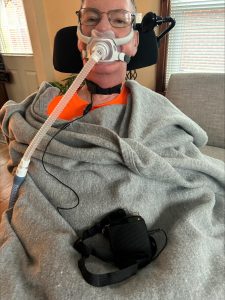
als communication voice amplifier throat micWe have had families share how our TEN-4 throat microphone and speaker amplifier kit helped their loved ones speak more comfortably even as their voice weakened. Throat microphones pick up vocal vibrations directly from the throat instead of relying on air movement from the mouth. Because of this, people who have difficulty projecting their voice or shaping words due to muscle weakness can still be understood more clearly.

While this technology cannot stop the progression of ALS, it can restore a sense of connection. When a patient can once again say a few words to their spouse, call for help, or tell a family member they love them, the emotional relief can be significant. These moments matter. They help maintain dignity and reduce the isolation that many ALS patients experience.

Families often tell us that they simply want their loved one to feel heard when their voices become soft and light. One family shared that their loved one regained enough clarity to participate in simple conversations again. Another described how the improved speech clarity reduced frustration during daily care, allowing communication to flow more smoothly for everyone involved.


What Can Help Patients and Families

Although there is currently no cure for ALS, there are many ways to support communication and reduce emotional strain. The ALS Association and other medical groups emphasize that ALS places a significant burden on both the patient and their loved ones, making supportive tools essential.

Supportive tools and communication strategies include:

  • Early preparation for communication decline
  • Speech therapy and vocal exercises
  • Communication apps and devices
  • Voice banking for future use
  • Low tech alphabet or letter boards
  • High clarity microphones such as throat mics
  • Caregiver support programs
  • Counseling for emotional health

The goal is not only to support day to day communication but also to reduce stress, preserve dignity, and maintain meaningful emotional connection.

The Role of Technology in Supporting Communication

The TEN-4 throat mic and amplifier kit is designed with engineering focused on clarity, direct vibration capture, and minimal strain on the user. Unlike traditional microphones that require breath control and volume, throat microphones detect the vibrations of the vocal cords even when speech is extremely soft.

For individuals with ALS, this can mean:

  • Clearer communication with less effort
  • More predictable audio performance as voice strength declines
  • Less frustration for both the patient and the caregiver
  • Improved emotional well being through restored connection

Every ALS journey is unique, but communication should never disappear sooner than it has to. Our goal is to make communication more accessible for as many people as possible and to help families stay connected through every stage of the disease.

Recommended Posts